
Going through a divorce can be a stressful experience. Add in the division of marital assets, and it’s another source of stress at an already stressful time. With 75% of the population owning a private pension, you may be wondering what happens to yours if you’re going through a divorce.
The short answer is that pensions are a valid part of the marital pot and may even be the most valuable asset of the marriage, and so they will be taken into account during a divorce. In this guide, we discuss how pensions are divided and how you can protect your pension.
What happens to your pension if you get divorced?
The law states that pensions accrued during the marriage are treated as joint assets during a divorce. In other words, they’re treated like any other asset, like houses, cars and savings accounts.
Note that the state pension isn’t split but will still be taken into consideration as part of the divorce, but the additional state pension can be shared in some situations.
Is your ex-spouse entitled to your pension after divorce?
Your ex-spouse is entitled to your pension after divorce because it’s considered to be a matrimonial asset if it was accrued during the marriage. However, even the part of the pension that was accrued outside of the marriage can still be shared if it is necessary to meet needs.
How it’s divided will depend on your specific circumstances, but in all cases, the goal of the court is to ensure a fair financial settlement for both sides.
The fact is, though, one in six divorced people said they didn’t realise their pension could be affected. It’s a common misconception that pensions are protected during divorce proceedings.
Can your ex-partner claim your pension years after divorcing?
You may think that after a divorce, that’s the end of the matter, but a divorce itself doesn’t automatically sever your financial ties. It’s a common problem in DIY divorces, where parties don’t seek proper legal representation.
Protecting your pension and any other assets requires a financial consent order approved by the court. Without this in place, there’s no legal time limit for claiming an ex-spouse’s pension. That applies even if your divorce has long been finalised, say if you remarried without first protecting your financial claims.
How pensions get split in a divorce
Knowing how pensions get split in a divorce ensures you’re protected and/or you receive what you’re entitled to as part of a fair financial settlement.
elieve it or not, many couples don’t account for pensions at all because they believe they’re not counted as a matrimonial asset. According to one survey,75% of divorced women admitted not incorporating pensions into their settlement, with 56% of men saying the same. This could mean ignoring the most valuable asset.
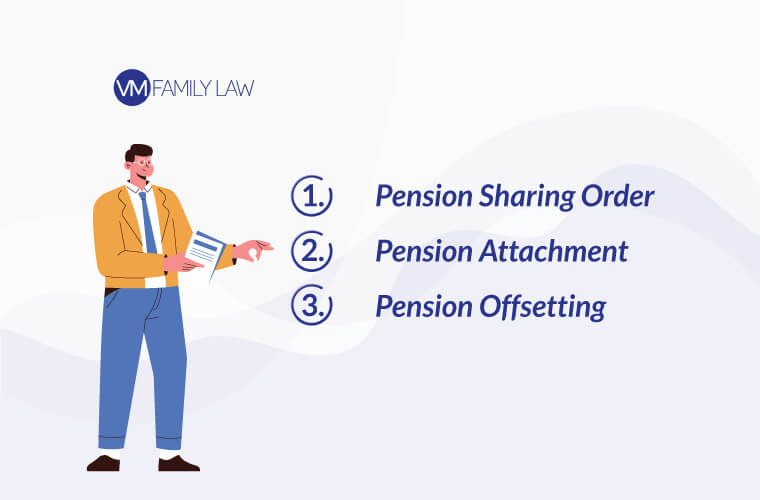
Generally, there are three ways pensions might be dealt with during a divorce:
1. Pension Sharing Order – The Court can transfer a specific percentage of a pension to the other party to provide them with a separate pension of their own which is then unrelated to their spouse.
2. Pension Attachment – Also known as earmarking. The pension stays with the original owner, but the ex-spouse is entitled to part of the owner’s pension income or lump sum when the owner retires.
The issue with earmarking is that the original owner is still connected to the pension and therefore this may fail if the owner passes away or the ex-spouse remarries, thus not achieving a “clean break”.
3. Pension Offsetting – Where one party is compensated for the pension owner keeping their pension in full. This could be a lump-sum cash payment or a larger share of the family home.
Will a court tell you how to split your pensions during divorce?
The Court generally favours divorcing couples working it out for themselves with the assistance of expert advice from solicitors, financial advisors and actuaries. However, the Court does have the power to determine the division of pensions where parties do not agree.
How a Court decides how a pension might be split depends on a range of factors unique to the situation at hand.
Factors the court considers when dividing pensions in a divorce
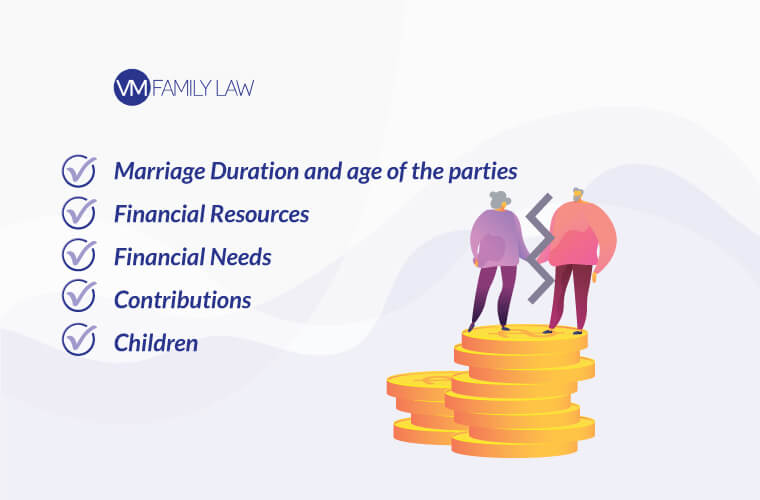
The Family Court doesn’t have a standardised template for how pensions are divided. Instead, they’ll account for various metrics with the goal of achieving a fair settlement for both sides. So, what will a court consider?
· Marriage Duration and age of the parties – Longer marriages typically result in an equal split of pension assets, especially if most of the contributions occurred during the marriage.
· Financial Resources – An assessment of the income, earning potential, and any other assets both parties might have.
· Financial Needs – The ongoing needs of each side. Judges will often look into the age, health and earning capacity of each side. That’s why an older or ill spouse might receive a larger share during divorce.
· Contributions – Contributions don’t just apply to the direct financial contributions to the pension, but also to non-financial ones, including managing the family home and childcare.
· Children – The needs of any dependent children, especially if you have a child who has chronic health problems.
All of this also comes against the backdrop of the overall division of marital assets. For example, if you’re determined to keep the family home and continue living in it, you may have to give up a bigger share of your pension.
Can couples decide on pension division during a divorce instead of the court?

Absolutely, couples candecide on pension division during a divorce instead of the Court, and indeed the court encourages divorcing couples to manage the division of marital assets amicably.
The Court will only intervene if a couple can’t agree and one party makes an application for a financial remedy order. However, the Court can also step in if the Judge believes the settlement is clearly unfair and in these situations, the Court should refuse to approve the consent order.
How can you protect your pension when getting divorced?
Pensions often go unnoticed in divorces because of the persistent belief that they’re not a marital asset. This is most common during DIY divorces, where neither side seeks professional financial or legal advice.
It’s why, despite it being cheaper, the answer is always to get in touch with an experienced legal professional who can help you understand your rights and how the system works. The reality is that pensions are incredibly complex, and the added strain of divorce proceedings means many simply bury their heads in the sand. This can lead to unfair outcomes.
The first step will be to obtain a Cash Equivalent Value (CEV) for each of your pension pots. A CEV assesses its full value and is a mandatory disclosure as part of dividing marital assets. Next, a legal professional will help you to understand your pension options and ensure any agreement is legally binding so the issue can’t be revisited years down the line.
In short, legal and financial advice from an expert is a powerful tool for protecting your pension, understanding your options, and achieving a settlement that’s both fair and legally binding. If you’re ready to protect your pension, working with expert divorce solicitors from VM Family Law is the best way to keep what you’re entitled to. For your free consultation, contact us today.