
Rebuilding your life after a divorce is a monumental task, no matter who you are. If you’re a parent, though, the issue is compounded because you also want to remain a solid, influential presence in your child’s life.
When a bitter ex undermines that relationship, it can feel as if the whole world is crashing down around you. Thankfully, family courts in England and Wales are there to support your relationship with your child when Parental Alienating Behaviours (PABs) are involved.
In this guide, we discuss what parental alienation is and how family lawyers can support you if you’re going through this.
What counts as parental alienation?
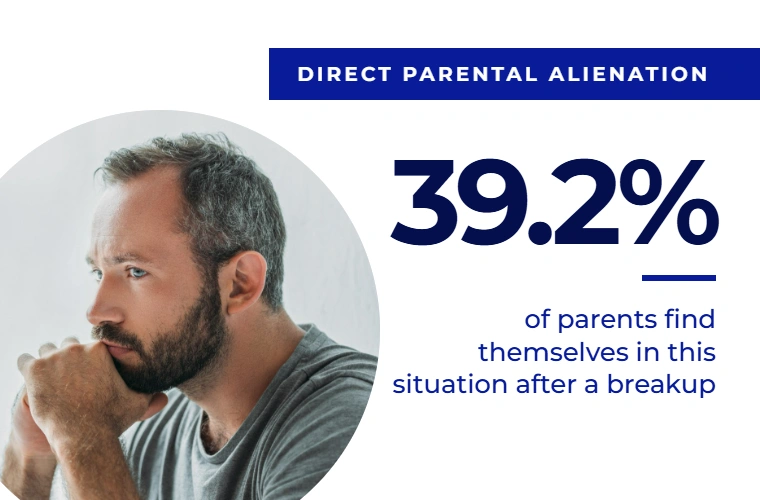
Direct parental alienation is more common than you might think. According to a study, 39.2% of parents find themselves in this situation after a breakup.
Firstly, parental alienation isn’t a separate crime or a clinical diagnosis from a legal perspective. It’s about finding facts, with the Children and Family Court Advisory and Support Service (Cafcass) defining it as a pattern of negative communications, actions, and attitudes by one parent to undermine their child’s relationship with the other.
These behaviours are so often devastating, resulting in children being unwilling to even see the other parent. Examples might include:
- Speaking negatively about the other parent in front of their child.
- Disrupting contact with the other parent.
- Using emotional manipulation tactics.
- Dragging the child into disagreements.
- Creating a culture of fear about the other parent.
Alienating behaviour vs. parental alienation
How courts look at parental alienation has changed. In the past, there was a thing known as Parental Alienation Syndrome (PAS), but this has since been seen as a pseudo-science.
Instead, the President of the Family Division focuses on Alienating Behaviours (AB), which focuses on specific behaviours. In other words, it’s no longer about labelling a parent, but about what’s been going on and whether it’s a barrier to a child’s best interests.
What isn’t alienating behaviour?
Not all breakdowns in the relationship between child and parent are necessarily forms of parental alienation.
Primarily, if an estrangement is justified due to abuse, volatility, or neglect, this is a natural response from a child, and so the courts will recognise this. Courts also recognise that children often have temporary preferences for one parent or the other, especially during difficult transitions.
A child simply preferring to spend more time with one parent or another isn’t a form of alienation. Remember, the child’s welfare is always the court’s primary concern, meaning contact time won’t always be a straight 50-50 split.
How family courts approach parental alienation
The days of treating parental alienation as a medical condition are long gone in England and Wales. The approach has changed entirely, with the welfare of the child being the primary concern that overrides all else under the Children Act 1989.
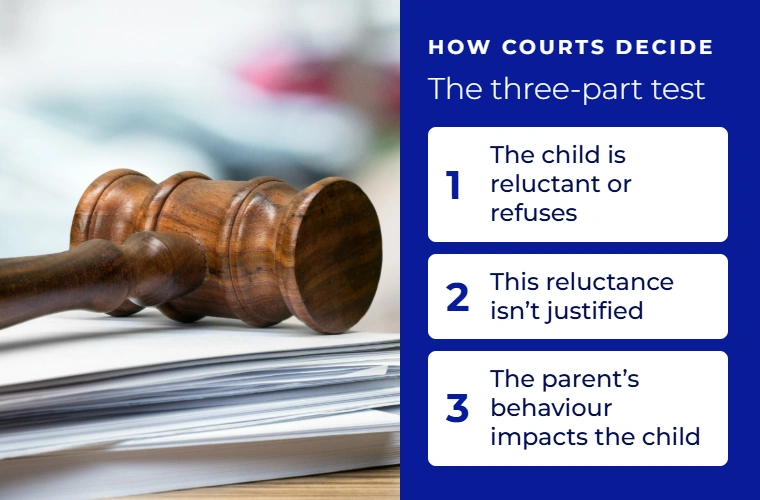
Today, judges won’t allow psychologists to diagnose PAS or consider it when making their decision on whether alienation behaviours are taking place. Today, the courts use a three-part test.
- The child is either reluctant or refuses to spend time with their parent.
- This reluctance isn’t justified by the parent’s own behaviour.
- The parent has behaved directly or indirectly to impact how the child feels about their other parent.
If there are allegations of domestic abuse, the Court will also investigate these allegations as well as alienating behaviour.
What evidence is needed in a parental alienation case in family court?
Going to court because you believe that your ex is intentionally impacting your relationship with your child means you would have to provide evidence to support your allegations.
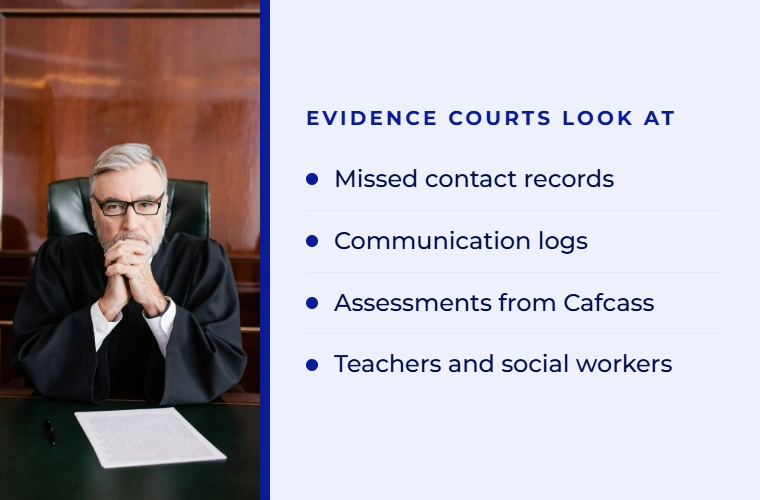
In England and Wales, courts will focus on specific patterns to judge whether alienation is in play. Examples include:
- Missed contact records.
- Communication logs, including texts, emails, and screenshots.
- Proof that the child’s rejection of you isn’t grounded in fact.
- Assessments from Cafcass, teachers, and social workers who can independently observe your interactions with your child.
Psychological evidence is sometimes requested by courts. If this happens in your case, they’ll turn to an independent professional who will focus on your family’s dynamics. Note that even when a psychologist’s input is requested, this still won’t result in any clinical diagnosis.
What outcomes could a family court impose?
Courts have a variety of tools to deal with alienating behaviours. Which option they choose if the allegations are proven depends on what best supports your child’s welfare. Examples of outcomes include:
- Changing Child Arrangements Orders.
- Imposing contempt findings for a potential breach of a previous order.
- Ordering family therapy.
- Ordering supervised contact.
In extreme cases where a child has either been emotionally harmed or is at risk of being emotionally harmed, a court can also demand that a child’s primary residence be switched to the other parent.
How family lawyers support you with parental alienation issues
Dealing with being rejected by your own child for no reason is about as soul-destroying as it comes. The last thing you want is to deal with the legal system too. That’s why family lawyers are there to help you manage and resolve alienating behaviours.
At VM Family Law, it’s our job to gather evidence and guide you through the various steps needed to put a stop to alienating behaviours and rebuild your relationship with your child. This includes applying to change an existing Child Arrangements Order, setting up mediation, and coordinating expert testimony.
Above all, we do our absolute best to act quickly and help you select the route that gives you the best possible outcome. If you’d like to learn more about how we can help, or to schedule your free consultation, contact VM Family Law today.