
The breakdown of a relationship can be an emotional, traumatic experience for everybody involved. We know how challenging it can be to move on, but when children are involved, you want to do everything you can to protect them from the hurt of a family breakup.
Where your child lives, who they spend time with and when each parent has contact are three areas covered in a Child Arrangements Order (CAO). And it’s no exaggeration to say these topics are amongst the most hotly contested.
Mediation is a critical tool for resolving these issues as amicably as possible. In this guide, we discuss the importance and benefits of mediation, and how it works within the current legal landscape.
Is mediation necessary before a Child Arrangements Order (CAO) is made?
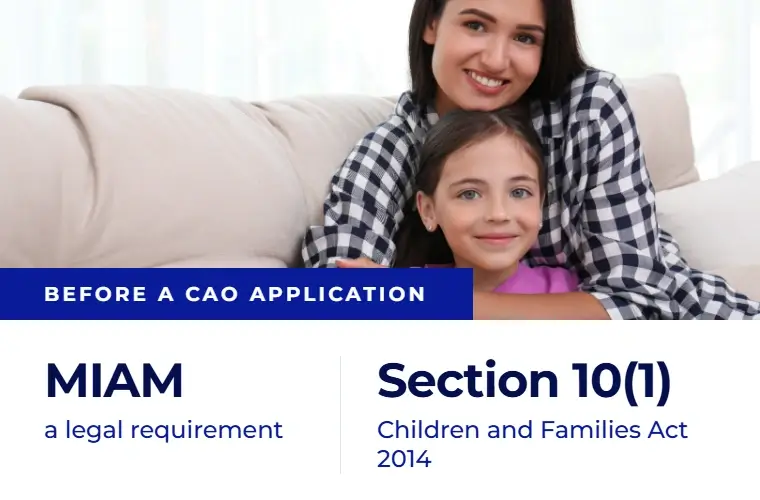
Proof that you’ve attended a Mediation Information and Assessment Meeting (MIAM) is a legal requirement. Under Section 10(1) of the Children and Families Act 2014, you must attend one before a family court will hear your CAO application.
However, exceptions do exist, such as if there are claims of domestic abuse or an urgent safety risk to your children.
Why a family may need mediation
It’s always the preference of the courts that families can work out child-related issues amicably without needing any formal intervention from the legal system. However, if this can’t be managed informally, mediation supports families through the process.
Reasons why your family might need mediation include:
- You want to apply for a CAO, which requires attending an MIAM.
- A desire to resolve disputes cooperatively with the support of a neutral mediator.
- Putting your child first through a formal process that focuses strictly on the best interests of your kids.
- You want to settle the issue without a hostile, expensive and time-consuming court battle.
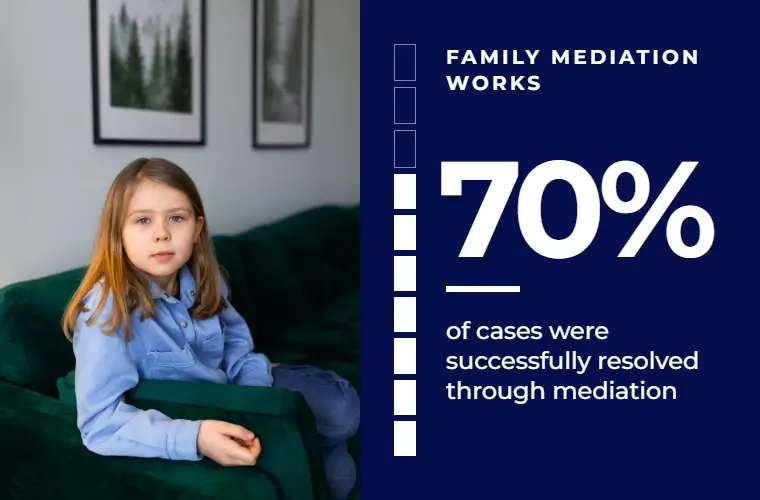
It’s easy to roll your eyes at the prospect of yet another formal set of meetings. But family mediation works. According to the Family Mediation Council, 70% of cases were successfully resolved through mediation.
The benefits of family mediation when child arrangements are involved

Your child’s future is naturally going to be a common source of friction. Family mediation isn’t a form of couple’s counselling designed to put you back together but to ensure your child’s welfare, routines and emotional needs are prioritised going forward.
It’s the one form of child-focused mediation that can put aside how you feel about your ex to concentrate on doing what’s best for your children. The core benefits of Mediation include:
· Putting Your Kids First – Mediation focuses on your children and helps you leave your personal issues aside. Older children can even benefit from child-inclusive mediation, which provides a forum for your kids to voice their feelings and preferences.
· Maintaining Your Control – Apply to the Family Court, and a judge is ultimately the one who decides the final outcome. Mediation gives you and your ex-partner the chance to keep control and reach a solution that suits you both.
· Minimise Conflict – Neutral mediators lead these sessions and keep the discussion on track without descending into arguments and bickering. They build a calm environment that concentrates on co-parenting without trying to work out who’s right and who’s wrong.
· Save Time and Money – Formal CAOs take months to work out and can be expensive. Mediation is a far more cost-effective option, and you may even be eligible for government support from the Family Mediation Voucher Scheme.
· Better Compliance and Communication – Working together builds cooperation and makes it more likely that any agreements will hold in the long term. It works like this for the simple reason that it’s an arrangement that you created rather than something that was imposed upon you that you might not agree with.
Of course, mediation is only valuable when couples are willing to talk and communicate. Cases where there are serious child safety and welfare concerns or situations where you can’t even stand to be in the same orbit as your ex-partner may not see the same benefits.
Nevertheless, at least an attempt at mediation is required before you can start applying to The Family Court for a CAO unless an exemption applies to you.
How mediation works regarding child arrangements
Mediation follows a structured process of meetings with a neutral mediator. The goal is to strike an agreement whereby you’ll have a comprehensive parenting plan. These aren’t automatically legally binding. To make them legally binding, you’ll need to apply for a CAO through the courts which can be a much quicker and cheaper process if making the application with consent of the other party.
Generally, the process works like this:
· Step One – You’ll attend an initial MIAM individually to see if mediation suits your situation. If it doesn’t, the mediator will issue the MIAM certificate and you can then consider court proceedings.
· Step Two – Your ex-partner will also attend an individual MIAM. Separate meetings allow each parent to voice their feelings independently and the mediator to advise on the benefits of mediation.
· Step Three – Next, you’ll agree on the format if you both agree to mediate. You might meet face-to-face, through an online video call, or agree to stay separate, with a mediator moving between you (shuttle mediation).
· Step Four – Your mediator will create an organised agenda for these joint meetings, focusing on your child’s best interests. Primary issues usually focus on the practical, such as what an ordinary school week looks like or communication formats. Other subjects include birthdays, school holidays, and any other special occasions.
· Step Five – You’ll work with your mediator to stress test any proposals. Essentially, this will incorporate the logistics of travelling between both parents, the school run and any medical needs.
· Step Six – Should you reach an agreement, your mediator can document this for you or you can prepare your own parenting plan or you can simply proceed on the basis of the oral agreement reached.
There’s no legal requirement to formalise any agreement that comes out of mediation. Whether you choose to go down this route really depends on the dynamics you have with your partner. If there’s still a level of trust there, you might decide to go about it informally to see how things function.
Ultimately, the choice is yours. If you need support regarding your rights or you want to apply for a formal CAO, then it is always best to seek legal advice from expert divorce solicitors. At VM Family Law, we bring experience, empathy and legal expertise to each and every case to make things as straightforward as possible. If you’d like to learn more, contact us for your free consultation today.